

to meet & to know
The Hands That Make Katari
These families have perfected their crafts over generations. We travel to work with them directly, so every bottle carries their care, skill and tradition.

Argil green clay
Mohamed
Sidi Bouzid, Tunisia
It takes hours of driving down a dirt road and through a little sandy canyon to reach his home, a true little paradise in the foothills of the Atlas Mountains. Mohamed and his extended family have lived here for generations, surrounded by acres of olive trees, beehives, a chicken coop, a flock of sheep and, of course, a huge underground deposit of rare green clay that estheticians cannot stop raving about.
Mohamed is not really an artisan. He is a farmer, living a simple, sustainable life with his family. He works his land, makes the most incredible olive oil (green and almost thick) and loves his tea in the evening. His wife cooks the most delicious couscous, spicy and full of fresh spices and vegetables.
His kids and grandkids live the same way: no waste, no plastic, enjoying what Mother Nature allows them to grow in this beautiful, remote part of the country. Mohamed does not speak English and my Arabic is pretty poor, but communicating has always been easy, as long as we eat everything his wife prepares. That makes everyone happy!
Shop Argil Green Clay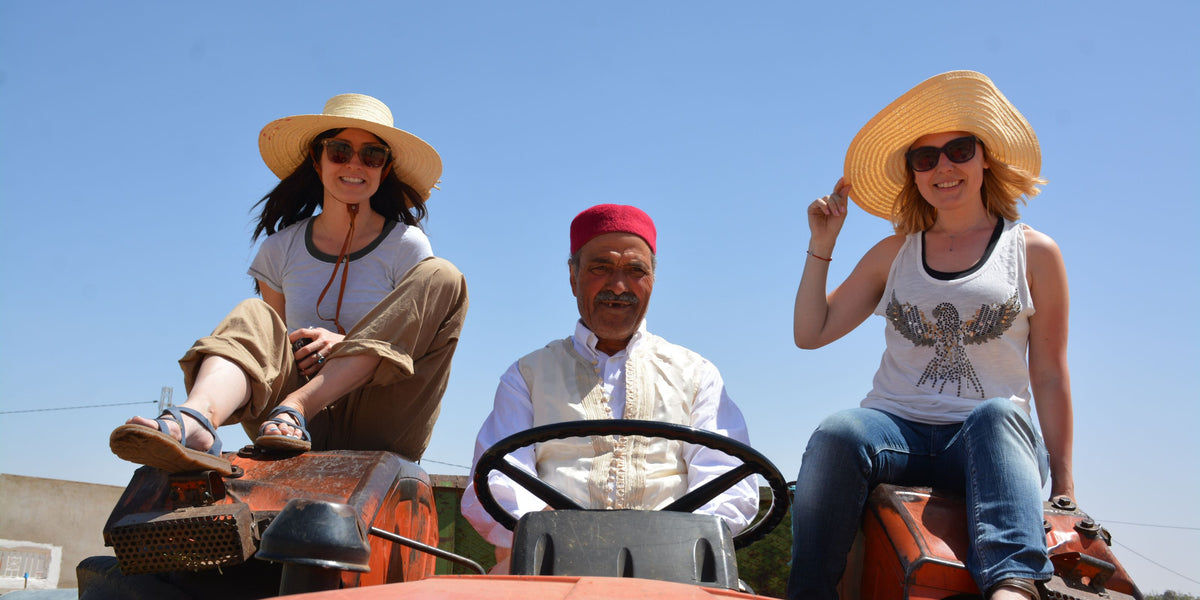
Visit Mohamed
See the place where Mohamed lives and where Katari Argil green clay comes from.

Clay pottery
Dalenda & Smisha
Sejnane, Tunisia
This village has a stork invasion, but a happy one. Hundreds of storks make it their home, and they say storks only nest in the cleanest, purest places. It is the same village in Mediterranean Tunisia where Dalenda, Smisha and dozens of other villagers make one-of-a-kind pottery, a craft protected by UNESCO as one of the most ancient in the world.
There is nothing simple about this style of pottery. Each piece takes hours. Artisans shape every piece by hand, without a pottery wheel, and hand-paint it before firing it in a low-temperature fire. The chips, dents and scratches are intentional, so each piece looks antique and precious. Earthenware is the right word: it feels made of earth and fire, with the warmth of the ancient Mediterranean.
The road to their village never sees tourists unless they are lost, so the potters of Sejnane sell at local markets or wait for pottery lovers (like our team at Katari) to find them. By sharing Dalenda and Smisha's craft with the world, with your support, we hope they and their neighbors can keep making pottery and pass it on to their kids.
Shop the Clay Mixing Kit
Visit Smisha & Dalenda
See the pottery village where Katari clay bowls are made.

Flower waters
Amin
Béja, Tunisia
Artisan usually means someone skilled in a craft, and that is true of Amin, he they took flower water distillation to the level of science. Amin holds a Ph.D. in flower water distillation and his partner, Wafa, a master's degree in distillation processes. We are lucky to work with the artisans who teach other artisans how to distill the most decadent flower waters.
When Amin is not distilling, he travels the country helping women in remote Tunisian villages learn vapor distillation, so they can form their own co-ops and make products to use, trade or sell at local markets.
Wafa is a business partner and master flower water maker who keeps the whole enterprise running smoothly, tending and expanding the gardens where future harvests grow. She also makes the best homemade cookies. If you have not tried Tunisian sweets, you are missing out.
The video you are about to watch is from a newly formed co-op that just started that week.
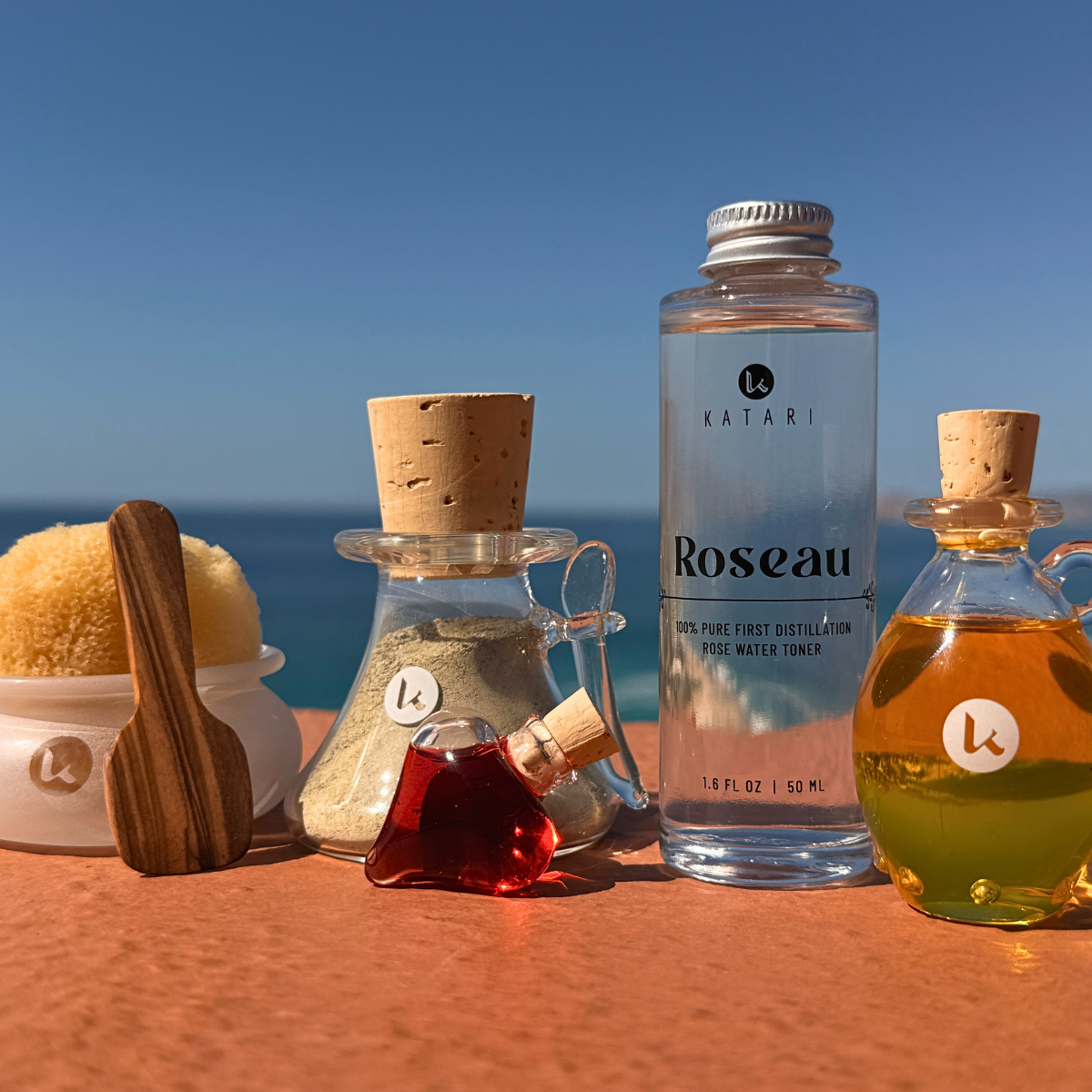
From their stills: Roseau Rose Water and Géran Geranium Flower Water.

Visit Women's Co-Op
Watch flower water distillation and hear from Wafa and Amin.

Cold-pressed oils
Amr
Cairo, Egypt
Amr does not say much. He does not brag, and he will not tell you right away that he comes from generations of oil makers. He should, because his team presses the best, most colorful and most concentrated fresh oils we know. At his workshop, the first thing you notice is how genuinely happy everyone is. You cannot fake happy, and people have worked with Amr for decades.
Cold-pressing is hard. Imagine squeezing water out of a dry piece of paper: you need a ton of paper for a few drops. Seeds are dried completely, then pressed without raising the temperature or adding liquids, both of which destroy vitamins. And it is truly small batch: when we asked Amr to set a few gallons aside for us, he refused. He does not store oils. If you want an oil, he presses it fresh. Every time.
His seeds come from small farms south of Aswan, where sustainable farming has been practiced for thousands of years. No two batches are the same: pomegranate oil ranges from orange to deep red, and roasted black castor beans give oil from beige to bluish purple. After work, Amr retreats to his little farm an hour south of Cairo, where a table of fruit, fresh flatbread, eggs and tahini with black honey is waiting.
Shop Cold-Pressed Oils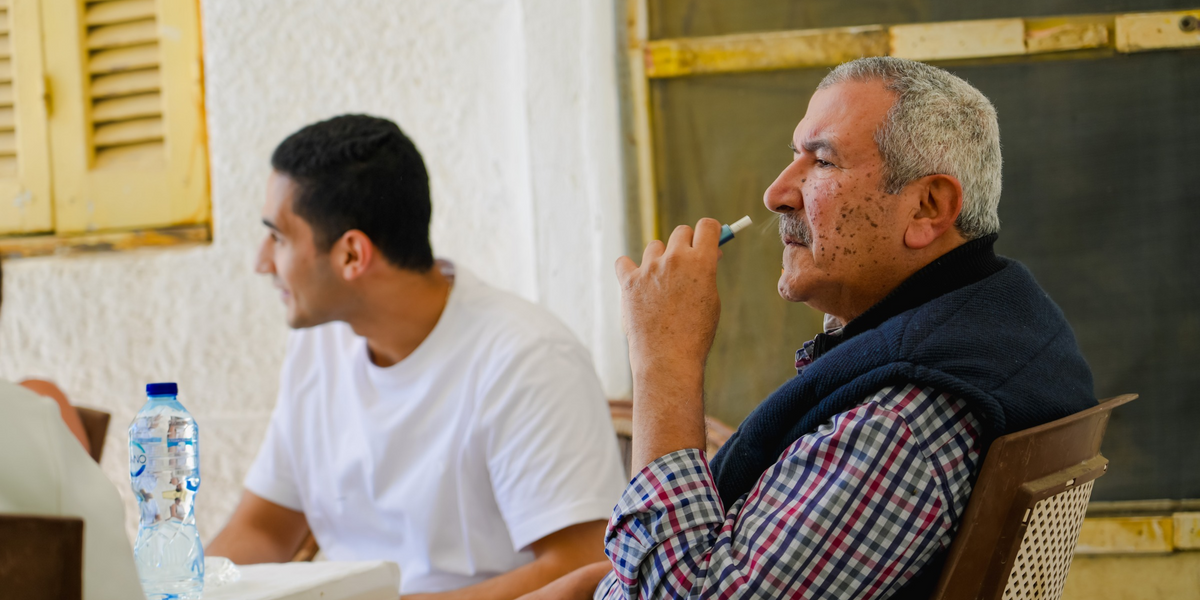
Visit Amr
Visit a farm near Alexandria, Egypt and meet Katari oil maker, Amr & his family.
Barie oil
Tarek
Tunis, Tunisia · oil workshop in Béja
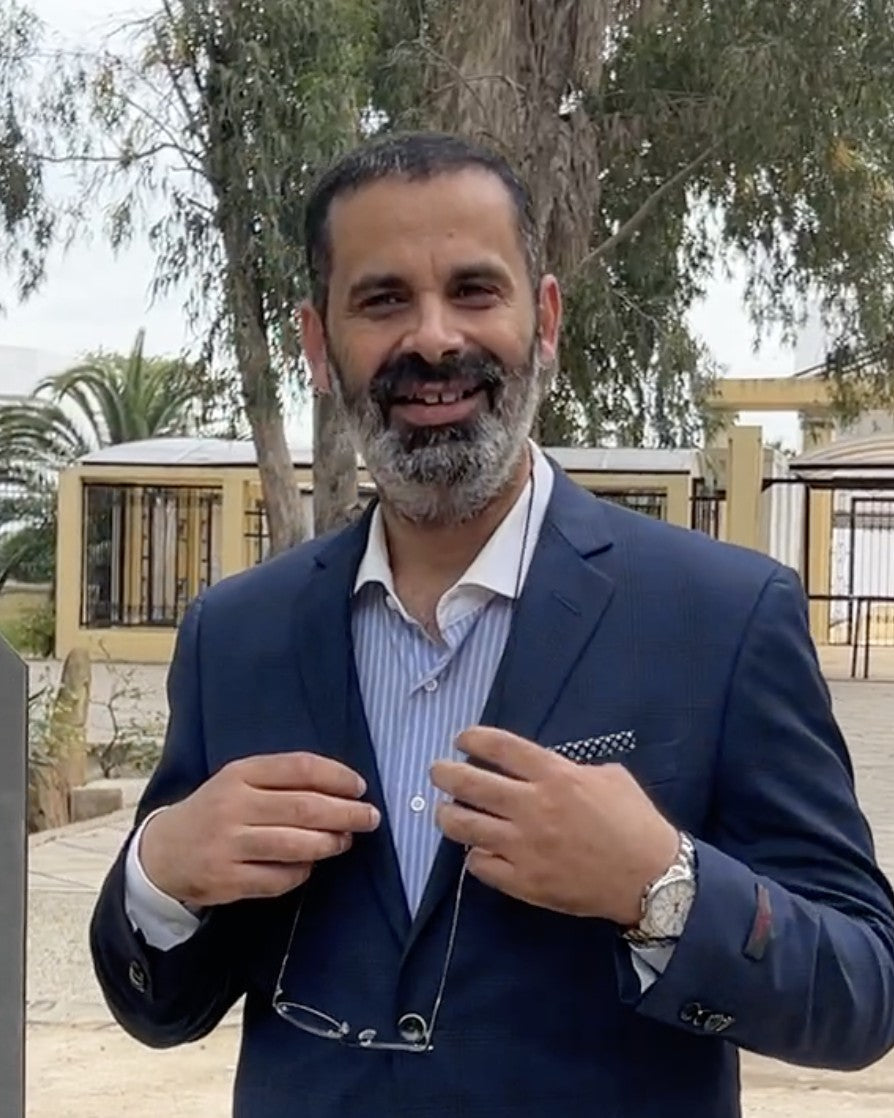
Tarek makes only one oil: prickly pear cactus seed oil, or Figue de Barbarie (hence the name, Barie). A Ph.D. in particle physics and a university professor in Tunisia, he chose it because he believes it is the best oil in the world and the most powerful against aging. Why make anything else?
Tarek always wears a suit and tie, even in blistering heat. He speaks perfect English, French and Arabic, and proudly shows off the equipment he uses to process and press the seeds of wild-grown cacti.
Making the queen of oils is not simple. It takes 8 tons of fruit to make 1 liter of oil, so true prickly pear seed oil cannot be cheap. Tarek's team harvests in a forest of wild cacti (watching out for the wild hogs that roam there), brushes each fruit with wild grass to remove the prickles, then dries the pulp and separates the seeds. After pressing, the oil rests for about a month so only the purest, golden, sediment-free oil is collected.
Also from Tarek: Poudre de Barie exfoliating powder.
Shop Barie Oil
Visit Tarek
Meet Tarek and see how much care goes into every drop of precious Barie Oil.
Hand-blown glass
Lamyaa & Mohamed
Cairo, Egypt
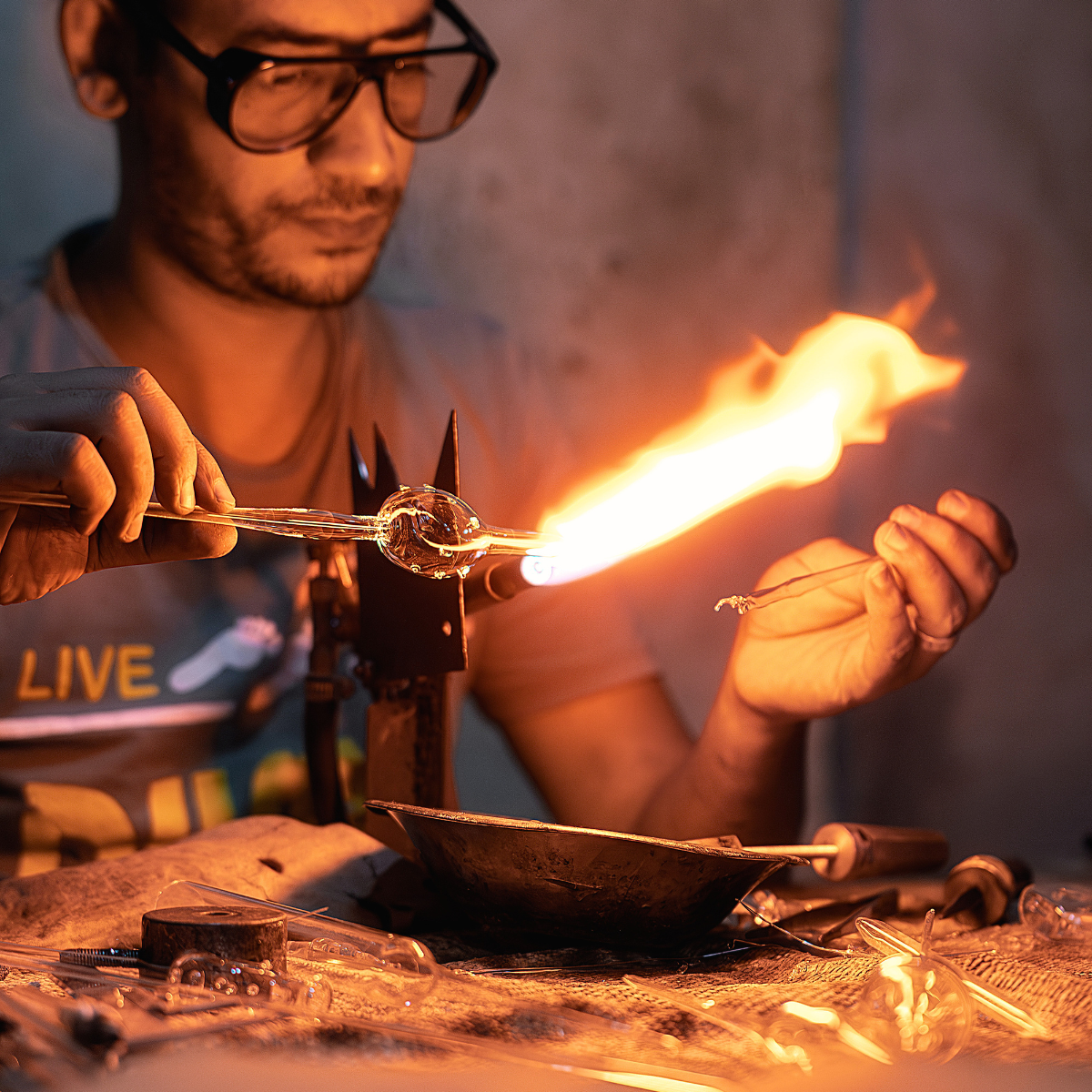
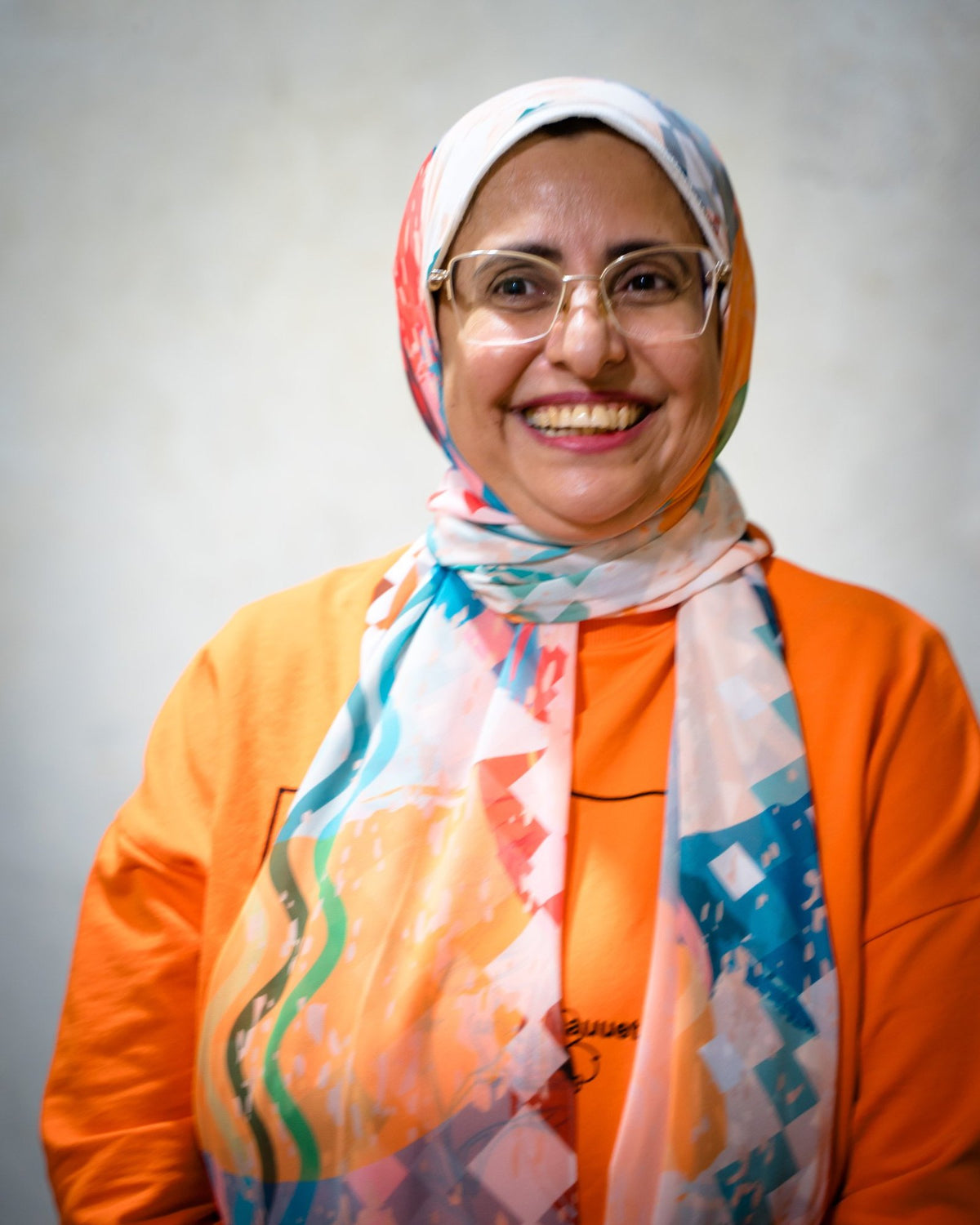
A woman in Egypt running a business of dozens of glassmakers, all of them men. Lamyaa does it with grace and impeccable communication, and always overdelivers. We are not sure she ever sleeps: she always responds right away. With a master's in marketing and a family of glassmakers behind her, she creates traditional Egyptian glass ornaments and Katari hand-blown glass, something her team had never made before.
Crossing Cairo to her workshop can take hours. Next to a palm-lined field, with a few goats picking at the street, you hear the hum of air and fire and step into a narrow room where glassmakers sit at their stations, surrounded by piles of glass and music from an old radio. Hand-painting and frosting happen in another part of the city, trips Lamyaa makes daily.
Our wow moment came years ago, when Ali, the master glassmaker who first blew Katari glass, glanced at a sketch of a jar and waved for us to close the book. A minute later he was holding a perfect, freshly blown jar. Today Mohamed carries that craft forward at the furnace, and we keep creating with Lamyaa's team.
Shop Hand-Blown Glass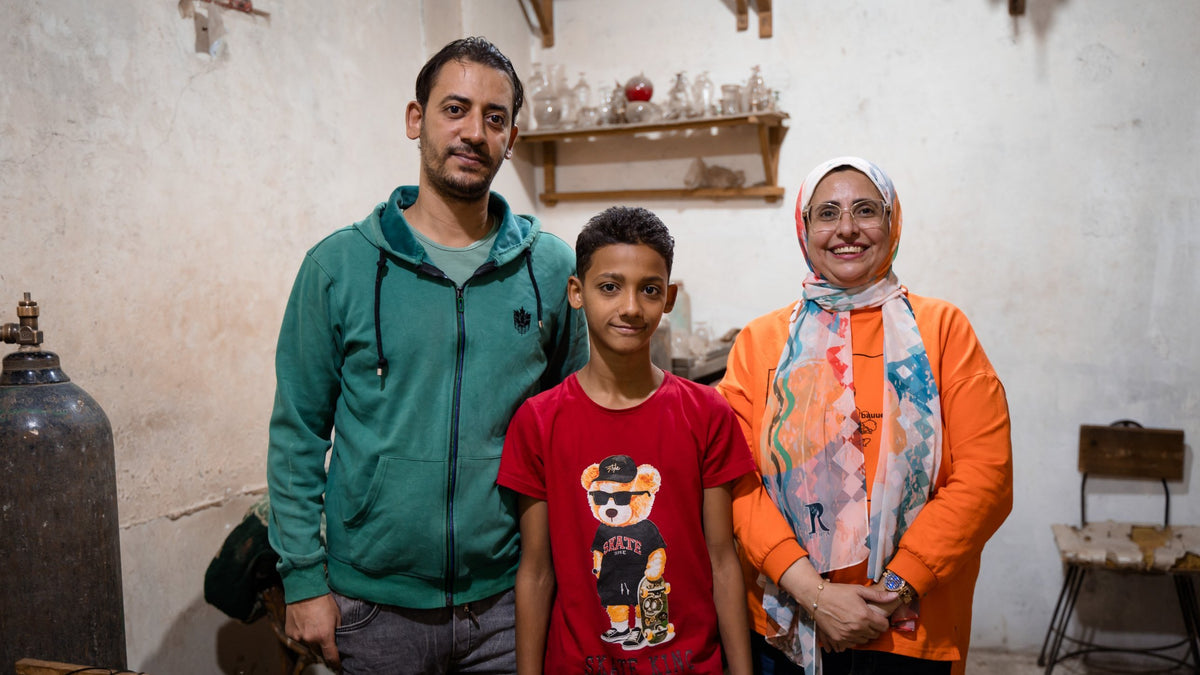
Visit the Glass Workshop
See Lamyaa's team at work making hand-blown glass in Cairo.
Olivewood
Omar
Sfax, Tunisia
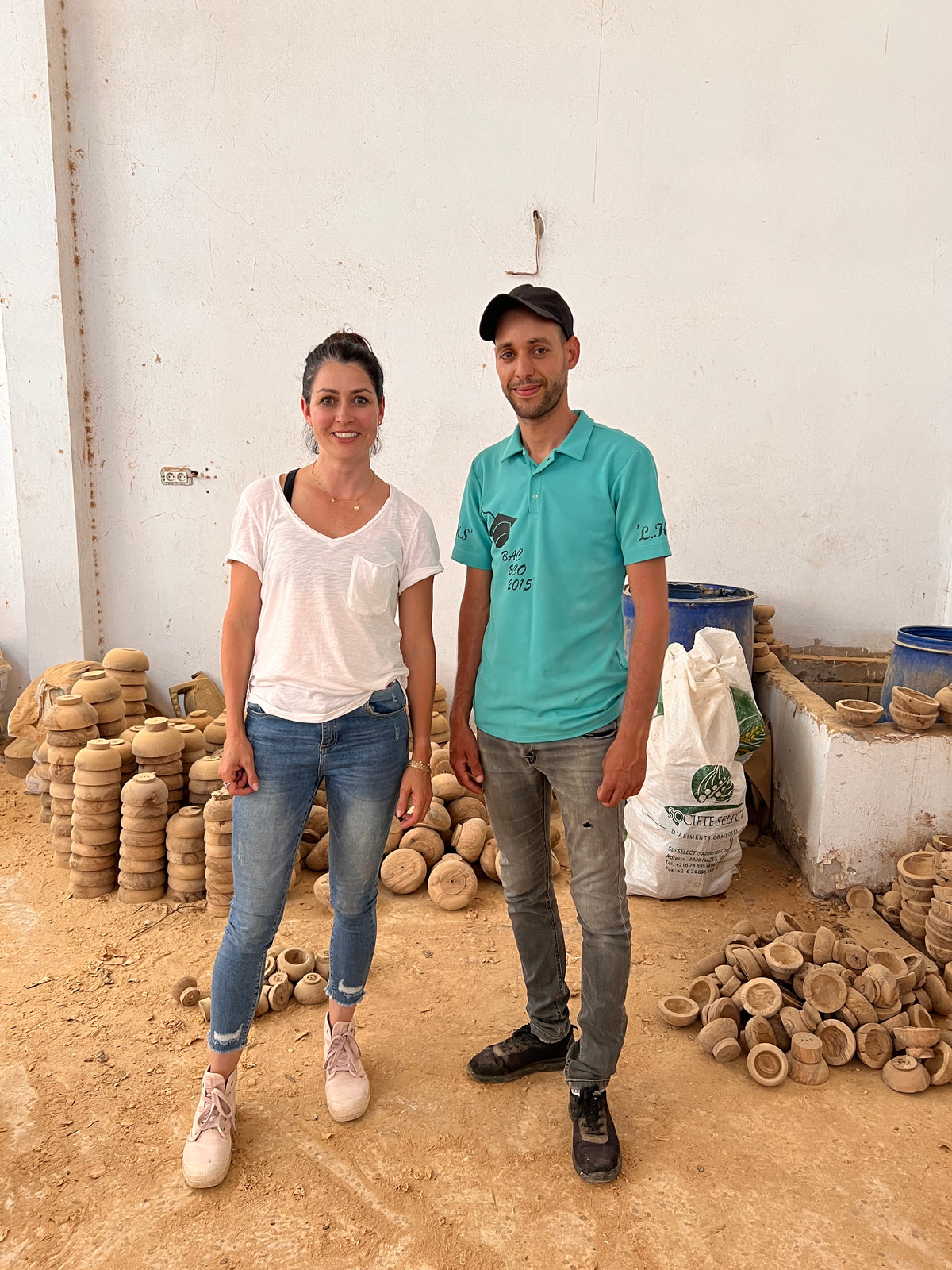
Omar's workshop is so far off the map that the first time, he came to meet us instead. When we finally made the trip, we found a loud, dusty room full of life: sawdust everywhere, towers of rough bowls, and every single piece being carved by hand.
Here is the surprise: the smaller the piece, the harder it is to make. A big bowl or a cutting board is far easier than a tiny spoon or spatula, which takes hours of careful shaping, sanding and oiling. So our little olivewood tools are not small for the price. They are the hardest things in the room to make, and every one is a small work of art.
Old olive trees that no longer bear fruit become these tools, and for every old tree, a new one is planted. It has always been this way.
Shop Olivewood Tools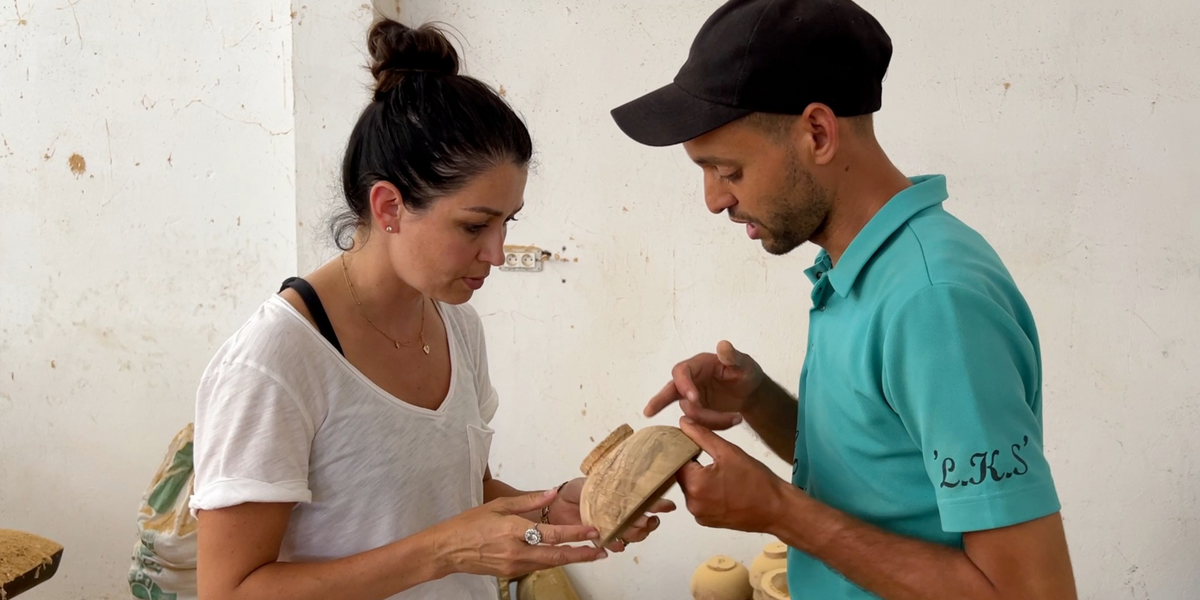
Visit Omar
Take the long road to Omar’s workshop and see how olive wood accessories come to life.
From their hands to yours
Bring the Mediterranean home
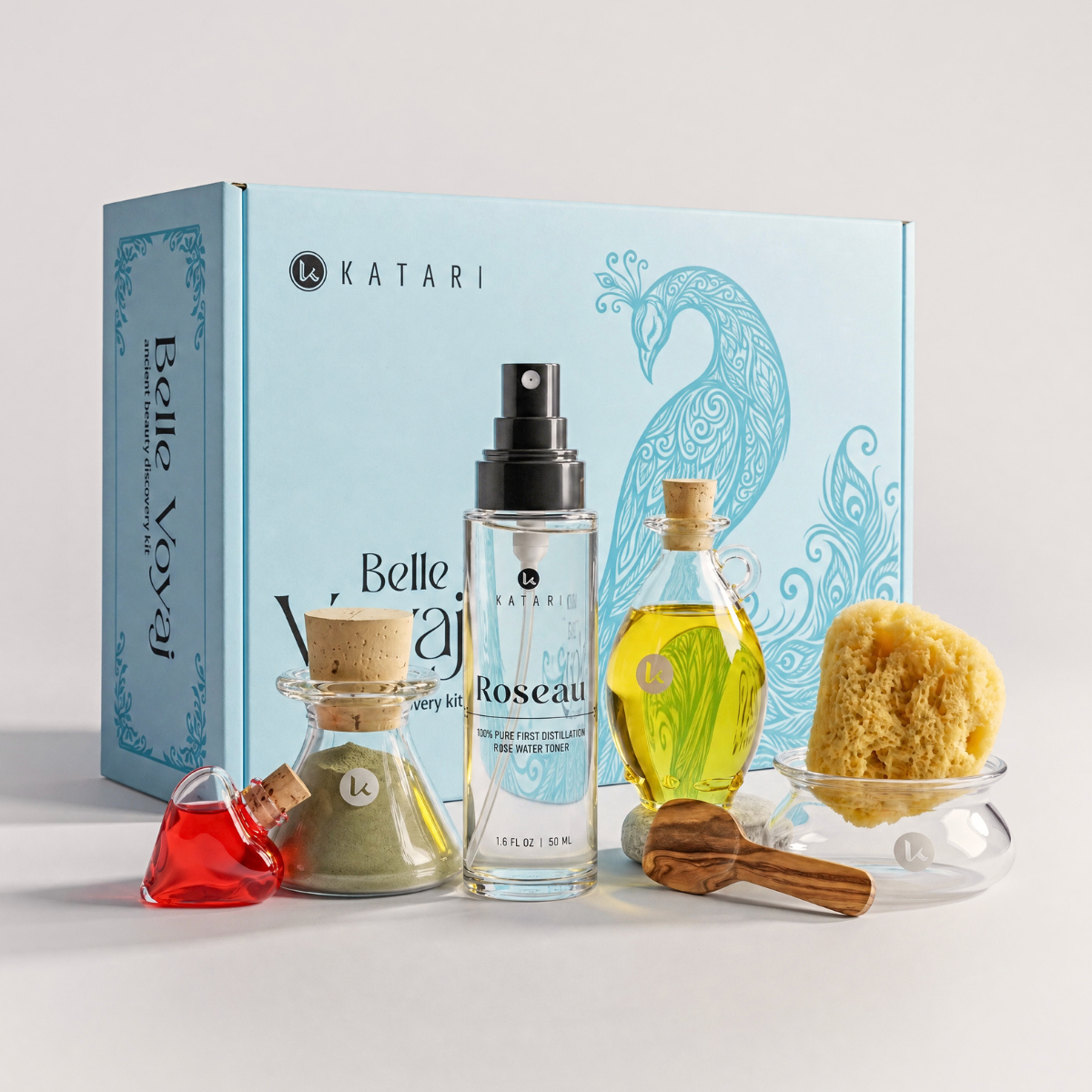
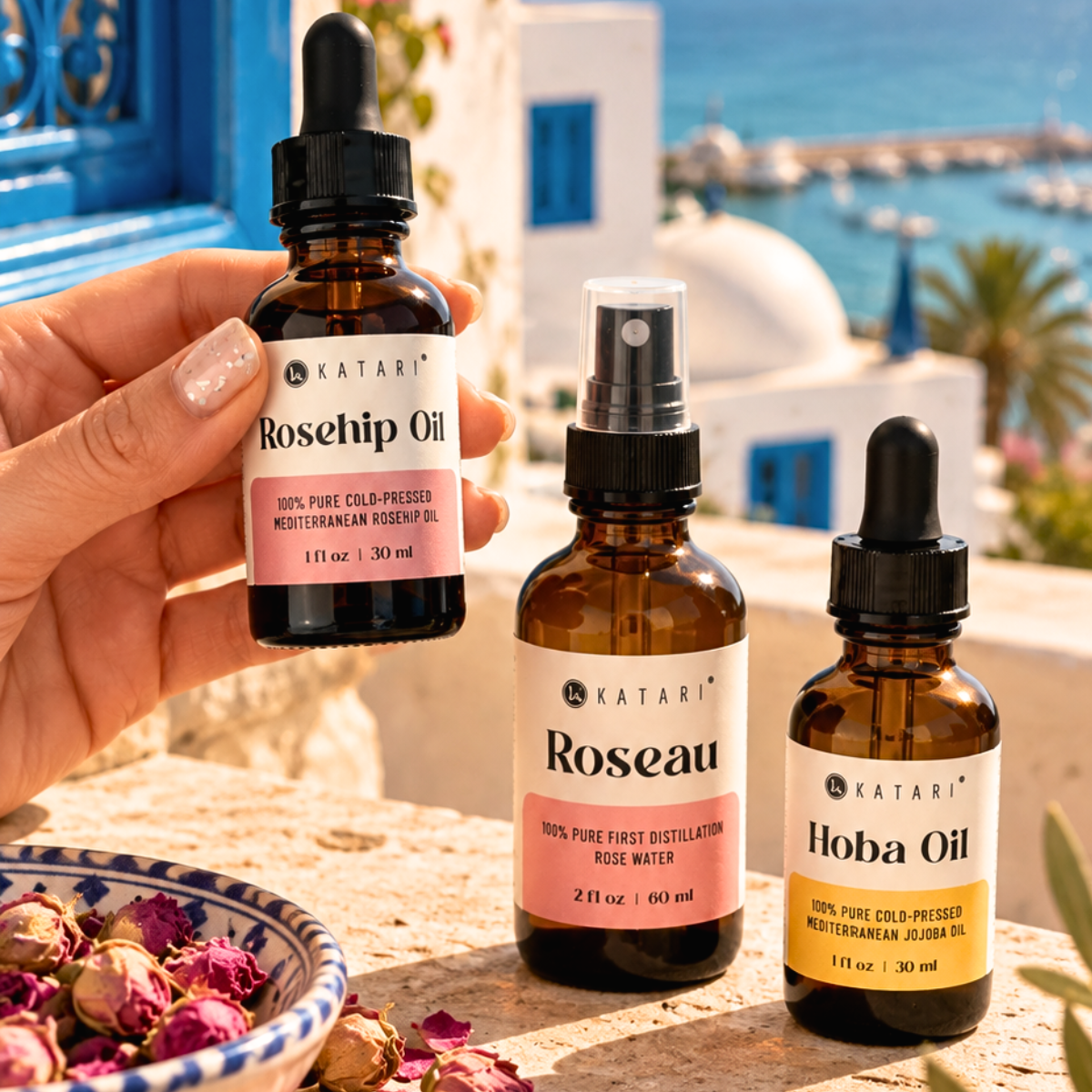
Start with three bestsellers in amber travel glass: Hoba to cleanse, Roseau to tone, Rosehip to glow. Shipped to your door for $59.
Start with Your First Ritual, $59